
A hacking cough after eating can be startling for any dog owner, especially when it happens suddenly or becomes a repeated pattern during meals.
Many dogs will cough once or twice while swallowing, but a persistent hacking cough after eating often signals something deeper affecting the throat, airway, or digestive system.
We outline the common reasons why a dog may hack and cough after eating, what you can do at home, and when to seek veterinary help.
Table of Contents
Dog Hacking Cough After Eating: Why It Happens
A hacking cough after eating typically occurs when food, swallowed air, or underlying medical conditions irritate or compress the dog’s airway, making it hard to swallow and breathe comfortably at the same time.
Some dogs cough because they eat too fast, while others cough due to problems like an enlarged heart, collapsing trachea, acid reflux, or conditions that cause food to move incorrectly through the esophagus.
Dogs with throat inflammation, soft palate issues, or breed-related airway compression are also more likely to cough right after swallowing.
Because eating involves complex coordination between breathing and swallowing, even mild irritation can provoke a noticeable hacking cough.
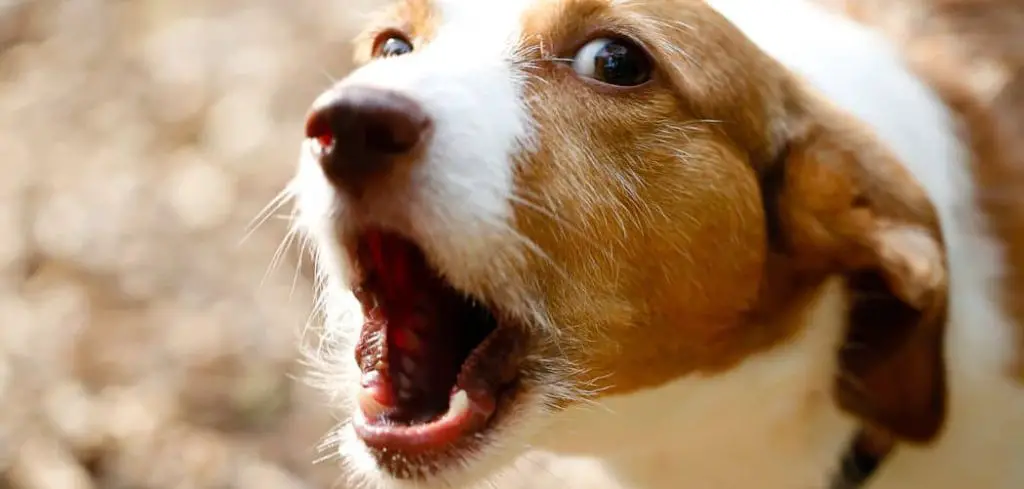
Dog Hacking Cough After Eating: Common Causes
Eating Too Fast or Swallowing Air
Many dogs cough after eating simply because they eat too quickly. When a dog gulps down food, they swallow large pockets of air.
This sudden mix of food and air expands the esophagus and momentarily disrupts normal breathing patterns, leading to a hacking or gagging cough right after swallowing.
The irritation is usually located where the airway and esophagus meet, so the dog may stretch their neck, swallow repeatedly, or cough harshly for several seconds. In some cases, the dog coughs every time they take a quick break from eating.
Fast eaters—especially large breeds or dogs who guard food—often develop this pattern early in life. While this cause is less serious than others, it can still lead to long-term problems such as bloating, discomfort, or increased coughing if not addressed.
Read more: Dog Coughing After Drinking Water (Causes and solutions)
Tracheal Compression From Excitement or Swallowing
Some dogs, especially small or toy breeds, have naturally narrower or more sensitive airways. When these dogs eat, the movement of swallowing pushes tissues in the throat and neck in ways that temporarily narrow the trachea.
This results in a sharp, hacking cough that begins immediately after the dog swallows and lasts anywhere from a few seconds to a minute.
It may sound like the dog is trying to clear something stuck in the throat, even though nothing is actually lodged there.
Dogs with mild tracheal collapse are especially prone to this type of cough because the pressure from swallowing momentarily weakens the already compromised airway.
The cough typically appears after excitement, drinking water quickly, or barking—so it makes sense that eating can also trigger it.
Enlarged Heart Pressing on the Airway
An enlarged heart can press against the trachea, especially in older dogs or dogs with cardiac disease.
This pressure is often most noticeable when the dog swallows food, because the throat tissue shifts closer to the enlarged heart during the swallowing motion.
The result is a dry hacking cough right after eating, often worse at night or when the dog lies down. Although this cough may seem mild at first, it is an important early sign of heart enlargement and should never be ignored.
You may notice coughing after drinking water or after small bursts of excitement as well. This cause becomes more likely when the cough shows up suddenly in a middle-aged or senior dog, or if the dog has a preexisting heart murmur.
Acid Reflux
Acid reflux occurs when stomach acid flows upward into the esophagus, irritating the tissues. Eating can trigger reflux episodes, especially if the dog has recently eaten fatty foods, has delayed stomach emptying, or suffers from chronic gastric issues.
When acid touches the upper throat or back of the mouth, it produces a sharp sting that makes the dog cough shortly after eating.
This cough often sounds harsh and repetitive, and the dog may lick their lips, swallow repeatedly, or drool between coughing episodes.
Over time, repeated reflux causes inflammation of the esophagus—known as esophagitis—which makes coughing after eating even more likely. Dogs with reflux also tend to cough more when lying down or eating late in the evening.
Megaesophagus or Esophageal Dysfunction
Megaesophagus is a condition where the esophagus becomes enlarged and loses its ability to push food into the stomach normally.
When a dog with megaesophagus eats, food may linger in the esophagus instead of moving downward. This can cause regurgitation, throat irritation, and a hacking cough after eating.
The cough develops because the retained food pushes upward against the airway, or because small amounts of food or saliva accidentally enter the airways. This process—known as aspiration—can lead to aspiration pneumonia, which causes even more severe coughing.
Not all cases of esophageal dysfunction are visible from the outside. In early stages, the only symptom may be a persistent cough after meals, making it easy to overlook the underlying problem.
Food Sensitivity or Throat Irritation
Some dogs cough after eating because the food itself triggers irritation. This can occur with:
Dry kibble that is too coarse.
Ingredients that inflame the throat.
Sudden dietary changes.
Food temperatures that irritate sensitive tissues.
A dog may begin coughing immediately after swallowing, usually with a hacking or gag-like sound. The irritation may persist for several minutes until the throat settles.
In dogs with chronic allergies or inflamed airways, even mild irritation during eating can provoke repeated coughing episodes.
Though not as serious as cardiac or esophageal causes, this issue still requires careful food evaluation.
Read more: Dog hacking cough randomly (Why it happens and what it means)
What to Do If Your Dog Is Hacking Coughing After Eating
Begin by slowing down your dog’s eating. Offering smaller, more frequent meals reduces the amount of food swallowed at once and helps prevent coughing caused by gulping or excess air intake. You can also use slow-feeder bowls or puzzle feeders to naturally slow the pace.
Provide fresh, room-temperature water and avoid allowing your dog to drink excessively right before or right after a meal, as this can worsen throat irritation. Keep your dog calm during mealtime, especially if excitement or anxiety tends to make their coughing worse.
If you suspect acid reflux or throat irritation, offering a short walk after eating can help the stomach settle and prevent acid from moving upward. Feeding your dog from a slightly elevated dish may also help dogs with esophageal issues or suspected megaesophagus.
Carefully observe the type of cough, its duration, and whether your dog shows additional signs such as gagging, lip licking, nasal discharge, lethargy, or breathing difficulty.
These clues help your veterinarian identify whether the problem is airway-related, digestive, or cardiac. If your dog is already on medication for heart disease, tracheal collapse, or reflux, notify your vet if the cough increases or changes in any way.
When to Call or Visit Your Vet
You should contact your veterinarian if the cough happens frequently or persists for more than a few days. Persistent coughing after eating suggests that the airway or digestive tract is being repeatedly irritated, which requires medical evaluation to prevent complications.
Seek veterinary care sooner if the cough becomes deeper, lasts longer after meals, or begins to appear in other situations such as at night or during exercise. A cough that worsens when lying down may indicate an enlarged heart or fluid buildup around the lungs.
Immediate care is needed if your dog shows any signs of aspiration, including sudden breathing difficulty, fever, severe lethargy, or producing a wet, crackly cough. These signs may indicate aspiration pneumonia, which is a medical emergency.
If your dog regurgitates food, loses weight, or begins refusing meals, schedule an evaluation promptly, as these symptoms often point to esophageal dysfunction or more serious underlying conditions.
Key Takeaway
A dog hacking cough after eating often seems minor at first, but it can be an important early sign of issues involving the airway, throat, esophagus, or even the heart.
Identifying patterns—such as when the cough occurs, how long it lasts, and whether other symptoms appear—helps you understand what’s happening and how urgently your dog needs care.
With the right diagnosis, treatment plan, and adjustments at home, most dogs improve significantly. If your dog’s cough becomes more frequent, more intense, or accompanied by breathing difficulty or regurgitation, reach out to your veterinarian right away.